
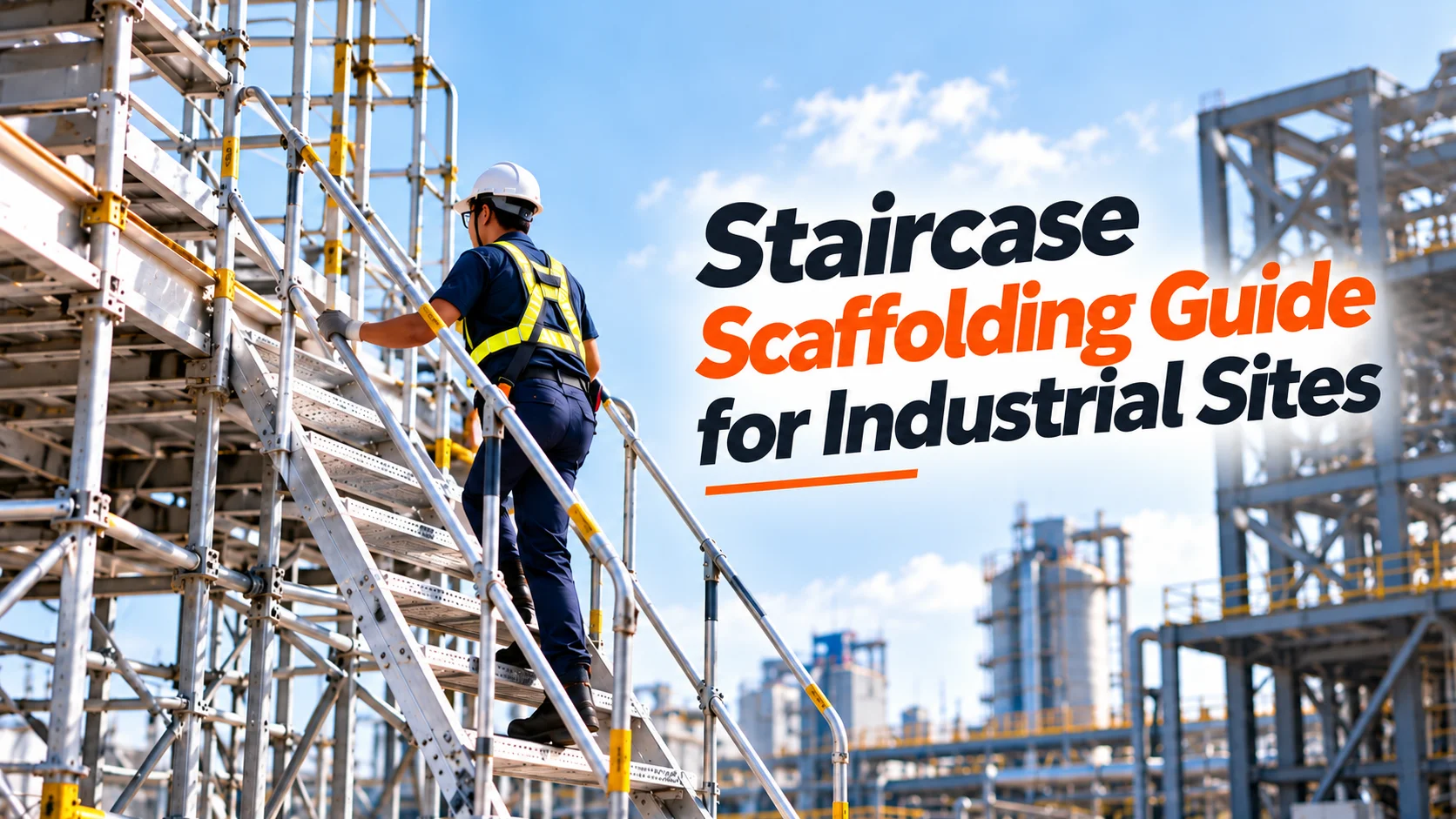
Scaffold Stair Towers for Industrial Sites in Malaysia: Types, Planning and Safe Use
When work at height means long shifts, heavy tools and many people, a ladder isn’t enough. This guide covers how to choose, plan and inspect a scaffold stair tower for your site.
When a ladder is no longer enough
Safe access begins with the job. How long will people be working up there? How much space do they need? What are they carrying? How many people need to get up and down?
For short tasks with one or two workers and a light toolset, a properly rated industrial ladder is usually the safest and most practical choice. A step ladder, platform ladder or extension ladder is quick to set up, easy to move and cost-effective for repeated use across a plant, warehouse or data centre.
A ladder stops being the right tool when the job changes shape:
- Work lasts hours or days, not minutes.
- People need a large working area, not a single point of access.
- Tools and materials must be carried up repeatedly.
- Many workers must move between levels at the same time.
In those cases a scaffold stair tower is the better answer. It gives crews a wider, steadier route up, handrails all the way, and a proper working platform at the top.
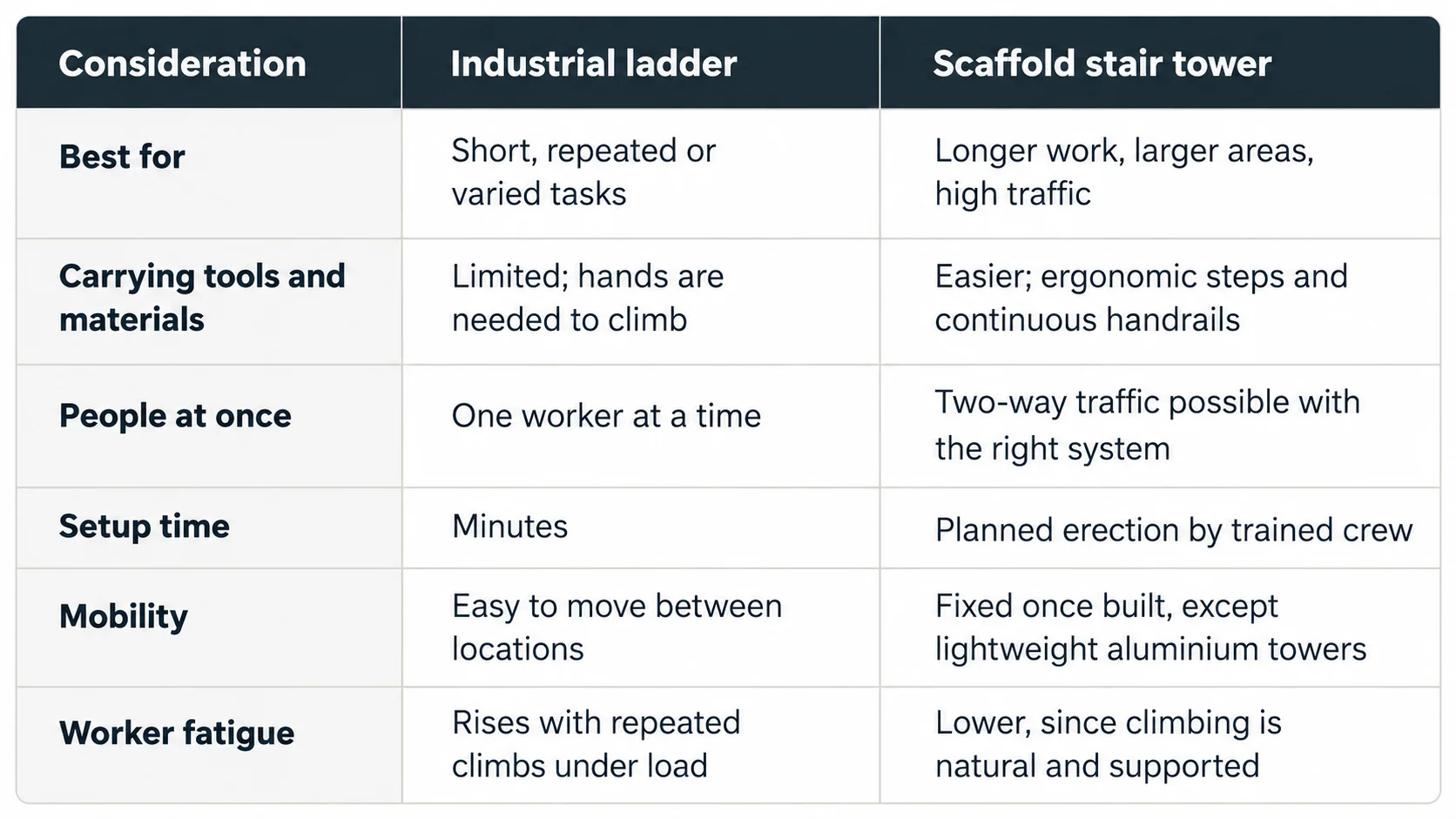
Ladder or stair tower: a quick comparison
Types of scaffold stair systems
If a stair tower is the better fit, the system you choose depends on duration, traffic load and site conditions.
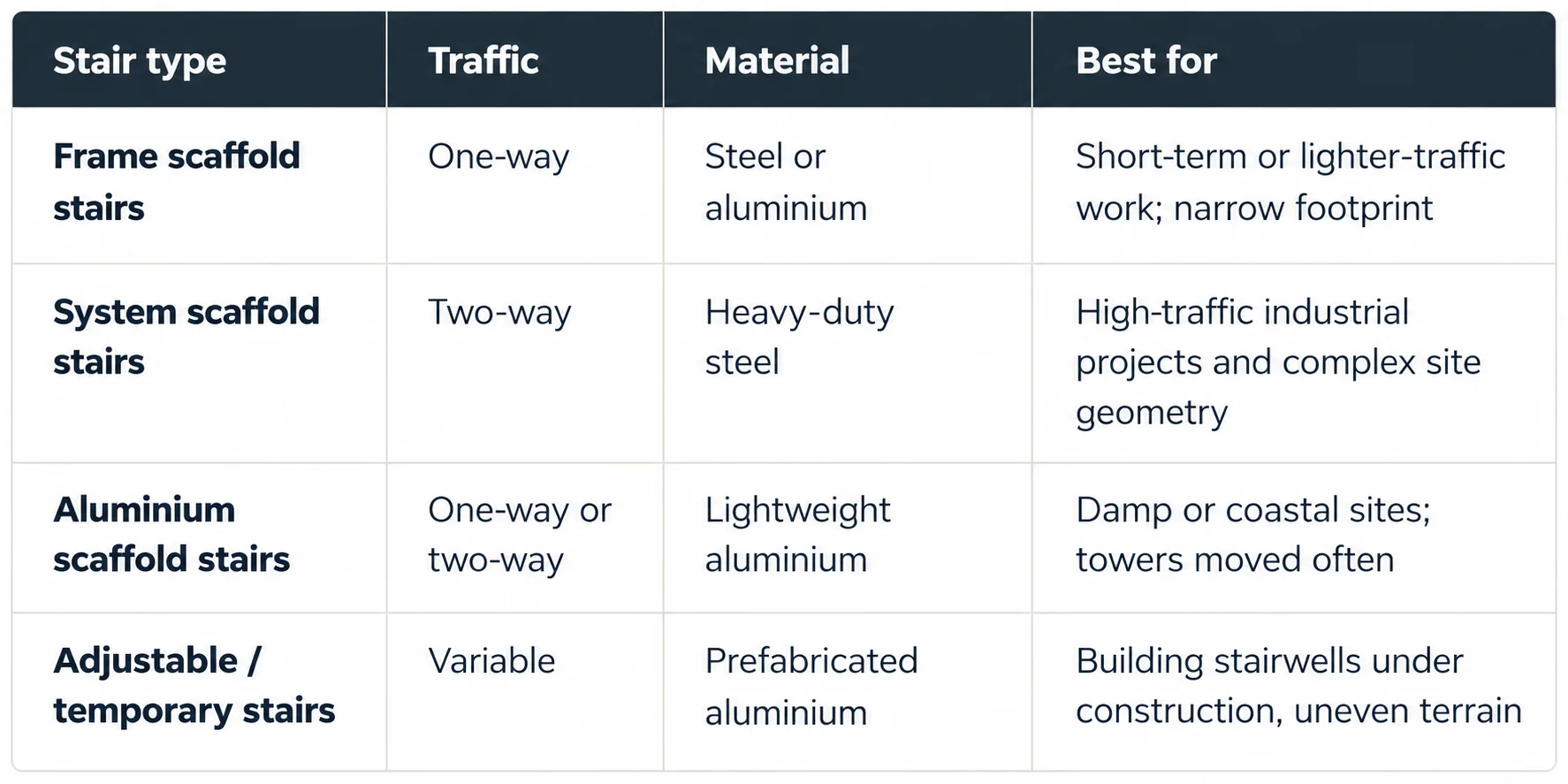
Steel or aluminium? Steel suits long-term use in harsh industrial conditions. Aluminium is lighter, resists corrosion and is quicker to dismantle and reconfigure when access needs change.
Planning a stair tower
Plan the tower as part of the site layout, not wherever space happens to remain.
- Circulation. Map the full route: site access, stair tower, working platform, work area. Poor placement means long walks along scaffold bays.
- Obstructions. Keep clear of doorways, vehicle routes, loading areas and crane zones.
- Ground conditions. Check levels across the whole footprint. Slopes, drainage pits and soft ground need base plates, mudsills or engineered sole plates to spread the load.
- Stability. Tall or narrow towers may need wall ties, guy wires or bracing to stay stable. Your scaffold supplier or designer will confirm what is required for your tower.
Pre-shift inspection checklist
Before anyone uses the tower, the competent person should confirm each point.
- Footing and base jacks: sole boards stable, soil compacted, base plates plumb, jacks not over-extended.
- Wedge connections: every wedge-lock joint driven home tight.
- Bracing and ties: diagonal braces secure on all specified faces; wall ties firmly anchored.
- Stair and deck locking: stair claws engaged in the transoms; board locks or deck retainers locked down.
- Guardrails and handrails: toprails, midrails and stairrails in place, with nothing projecting that could snag or cut.
- Toeboards and housekeeping: toeboards fitted on open sides; landings clear of debris, snow and oil.
- Tagging and access control: inspection tags displayed; unfinished sections blocked with “Scaffold Not To Be Used” barriers.
Planning a scaffold stair tower for your site?
Industrial Access helps factories, plants and construction teams in Malaysia plan safe access for work at height, from industrial ladders to scaffold stair access. Send us these details and we’ll come back with a suitable option:
- Working height and number of levels
- Footprint available and ground conditions
- Duration of the job and expected foot traffic
- Whether the tower stays put or needs to be moved