Ladder Quality Control and Inspection System
Consistent Quality Through Structured Verification
Equipment used for work at height must maintain structural stability and reliability throughout its operational lifecycle. Because ladders support technicians performing installation, servicing, and maintenance tasks, verifying structural integrity and fabrication consistency is essential.
Our inspection and quality control procedures are designed to ensure that ladder systems meet dimensional accuracy, structural requirements, and finishing standards before delivery. Through structured verification processes, we aim to ensure that equipment supplied to customers performs reliably during daily operational use.

Material Selection
Confirming aluminium profiles correspond with specified material grades used for the ladder fabrication.
Fabrication Verification
Checking our laser or MIG welding consistency, structural alignment, and component integrity.


Dimensional Measurement
Confirming ladder height, step spacing, platform dimensions and all parts according to design specifications.
Assembly Inspection
Ensuring ladder components are correctly fitted and securely assembled. NO LOOSE JOINTS are allowed.


Surface Finishing Inspection
Checking mill finish, natural anodised, or powder-coated surfaces for consistent coating quality, free from bubbles, peeling, or visible surface defects.
Final Quality Check
Each ladder undergoes our in house quality check plan before packing to confirm fabrication quality and structural consistency.

These procedures help ensure that ladder systems delivered for operational use maintain consistent fabrication quality and structural reliability.
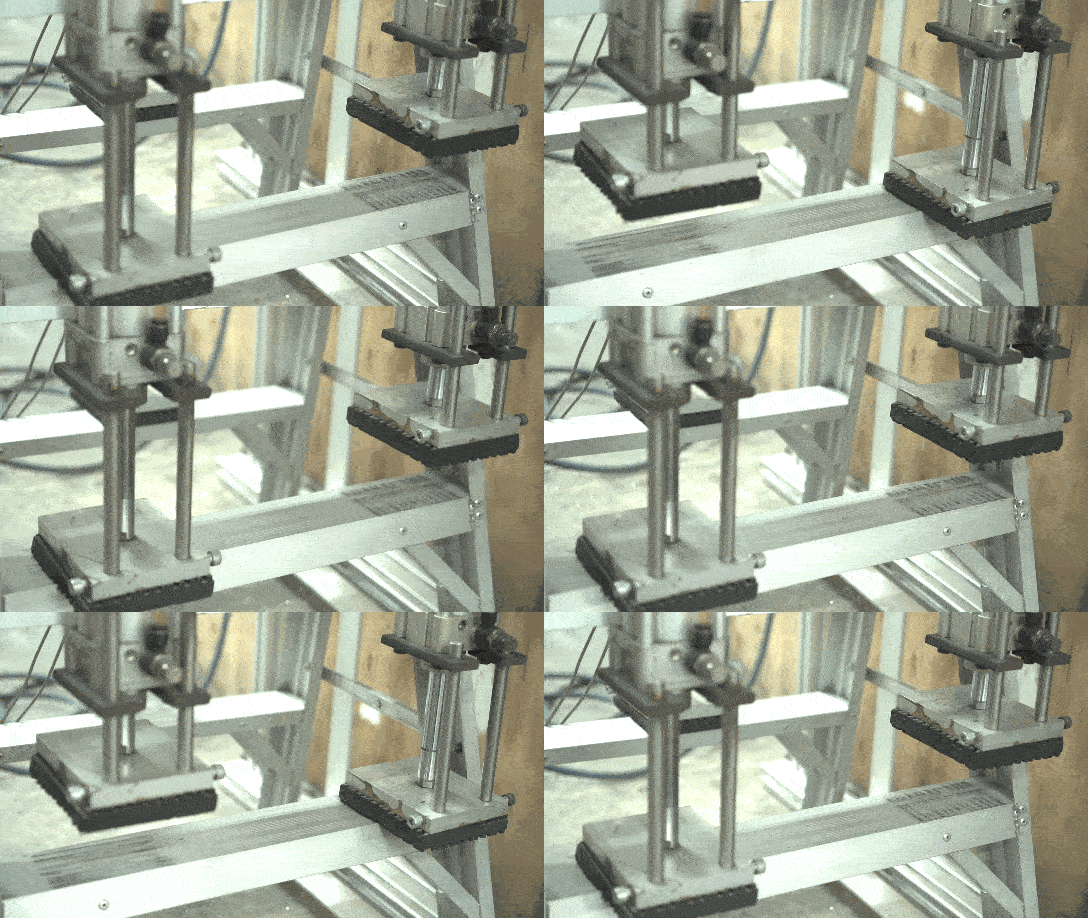
10,000-Step Durability Test
As part of the Inspection and Quality Control pillar within our S.U.I.T.E safety framework, selected ladder models undergo a 10,000-step durability test to evaluate long-term structural reliability.
Repeated climbing places continuous stress on ladder structures and welded joints. This test simulates repeated climbing cycles under controlled conditions to assess how ladder systems perform during frequent operational use.
Particular attention is given to the performance of welded joints, as these connections play an important role in maintaining overall structural stability.
The durability test helps verify the strength and reliability of laser or MIG welded joints or even our riveted joints, ensuring that ladder frames remain stable even after repeated climbing cycles.
Learn more about the framework on our S.U.I.T.E Programme page here.
Not Just Load Tested. Repeatedly Proven
We simulate repeated climbing to see what actually holds. Every step applies real stress on the ladder structure and joints.
Pro Tip: How to Check Ladder Quality Before Purchase
When selecting ladders for maintenance or engineering work, organisations should review more than just the product appearance.
Durability testing has been conducted
Welded joints maintain stability under repeated load

The ladder carries recognised certification such as SIRIM

Inspection or testing documentation is available
Reviewing these factors helps ensure that ladder systems are suitable for frequent operational use and demanding working conditions.
SIRIM Compliance
for Standard Models

Selected standard ladder models are SIRIM complied, confirming that these products comply with recognised Malaysian safety and performance standards.
SIRIM compliance report verifies requirements related to structural strength, design integrity, and product reliability. This report provides organisations with additional assurance when selecting ladders used for workplace maintenance and operational tasks.
For facilities responsible for work-at-height safety, compliance products help support compliance with recognised safety standards.
What Does SIRIM Compliance Mean?
It indicates that a product has been tested and verified according to recognised Malaysian safety and performance standards.
For organisations responsible for workplace safety, certification provides assurance that ladder systems meet requirements related to strength, structural stability, and product reliability.
Verification for
Custom Ladder Solutions
Custom ladder configurations developed for specific site conditions may require additional verification before they are used in operational environments.
For these customized ladder systems, in-house testing reports can be prepared to verify fabrication accuracy and structural performance based on our manufacturing inspection process. User can advise us too if they have any area to emphaize on during quality check.
These reports provide documented verification when ladder systems are produced according to specialised site requirements.

Inspection by Certified Ladder Inspector
Quality verification procedures are overseen by an authorised in-house certified ladder inspector.
The inspector reviews ladder systems to confirm fabrication quality, structural alignment, and assembly integrity before the product is approved for delivery.
This inspection process helps ensure that ladder systems meet internal quality standards and maintain the expected structural reliability prior to entering operational use.
Expert Insight: Why Ladder Quality Control and Inspection Matters
Ladders are used for maintenance and engineering work experience repeated climbing cycles and load stress.
Without proper inspection and durability verification, structural fatigue or connection failure may develop over time and can lead to unnecessary ladder accidents at worksite.
Structured inspection procedures help ensure that ladder systems remain stable and dependable throughout their operational lifecycle.
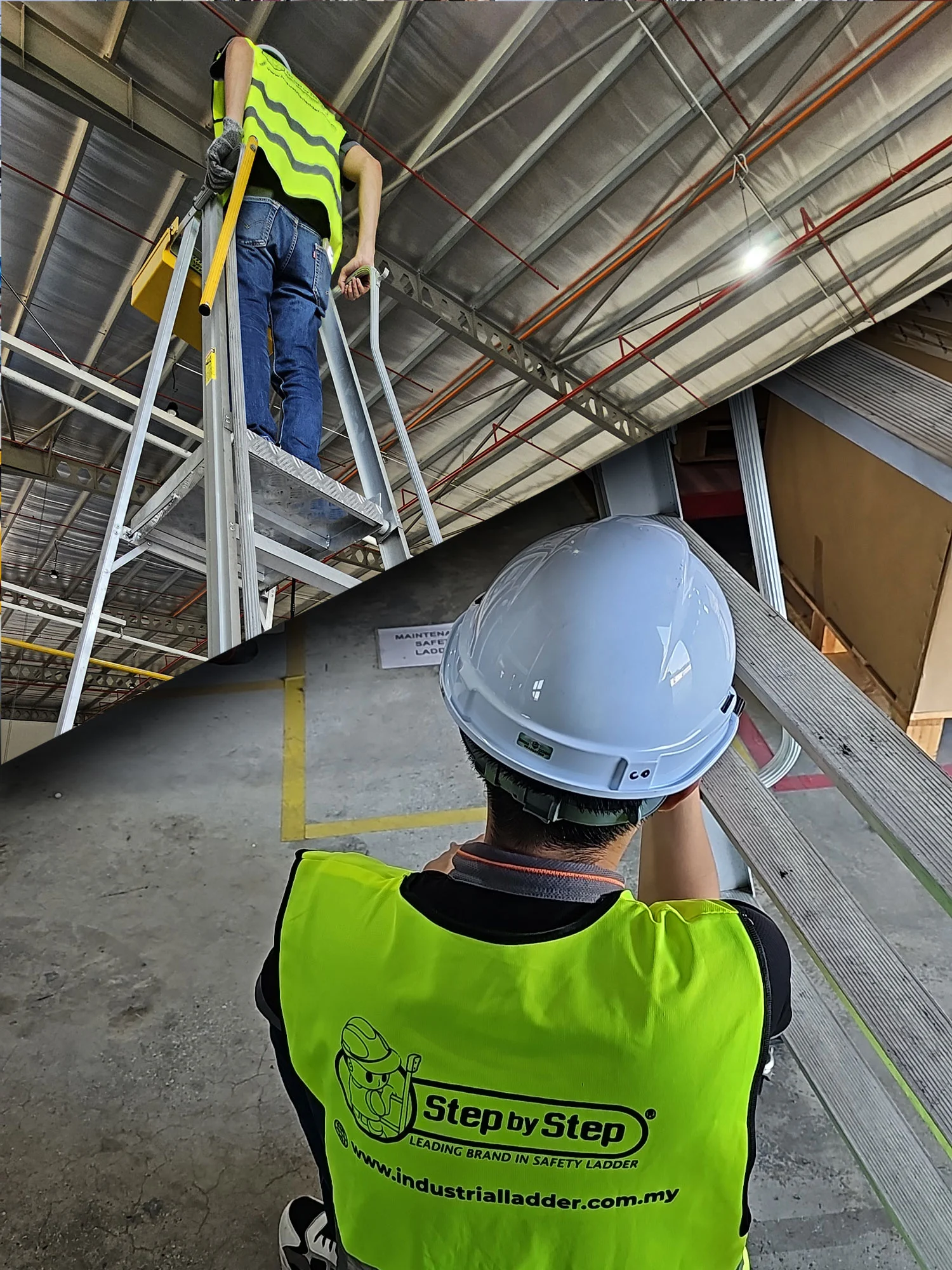
Need Verification or Quality Control Requirements?
For organisations responsible for work-at-height safety, selecting the right ladder system often involves reviewing specifications, certification requirements, and inspection documentation.
If you require clarification on ladder specifications, verification reports for customised ladder systems, or information regarding models, our team can assist in providing the necessary details.
We can also support discussions related to ladder configurations, operational requirements, and suitable solutions for maintenance and engineering environments.