Choosing the Right Ladder for Warehouse Operations
Warehouses, factories and industrial facilities rely on ladders for daily maintenance, stock access and equipment inspections. Choosing the right industrial ladder is important for supporting workplace safety, improving accessibility and maintaining efficient operations.
However, not every ladder is suitable for every working environment. Factors such as working height, load capacity, ladder design, material and frequency of use should all be considered before making a purchase.
Whether you manage a warehouse, manufacturing plant, distribution centre or industrial facility, this guide will help you understand how to choose the right ladder for your operational requirements.
1. Identify Your Warehouse Ladder Requirements
Start by understanding how and where the ladder will be used.
Common applications include:
- Accessing warehouse storage racks and shelving.
- Carrying out stock inspections and inventory checks.
- Performing equipment and machinery maintenance.
- Reaching elevated lighting and electrical installations.
- Conducting routine facility inspections.
Consider how frequently employees need elevated access and whether the ladder must be moved between different working areas.
A ladder selected for occasional maintenance may not be the most practical option for frequent industrial operations.
2. Choose the Right Type of Industrial Ladder
Different ladder designs serve different purposes. Understanding their applications makes it easier to select suitable equipment.
Step Ladder
Suitable for general access and maintenance tasks.
Step ladders are commonly used for general maintenance, inspections and accessing moderate heights. They are available in different sizes and configurations to suit different working environments.
Platform Ladder
Suitable for tasks requiring a dedicated standing platform.
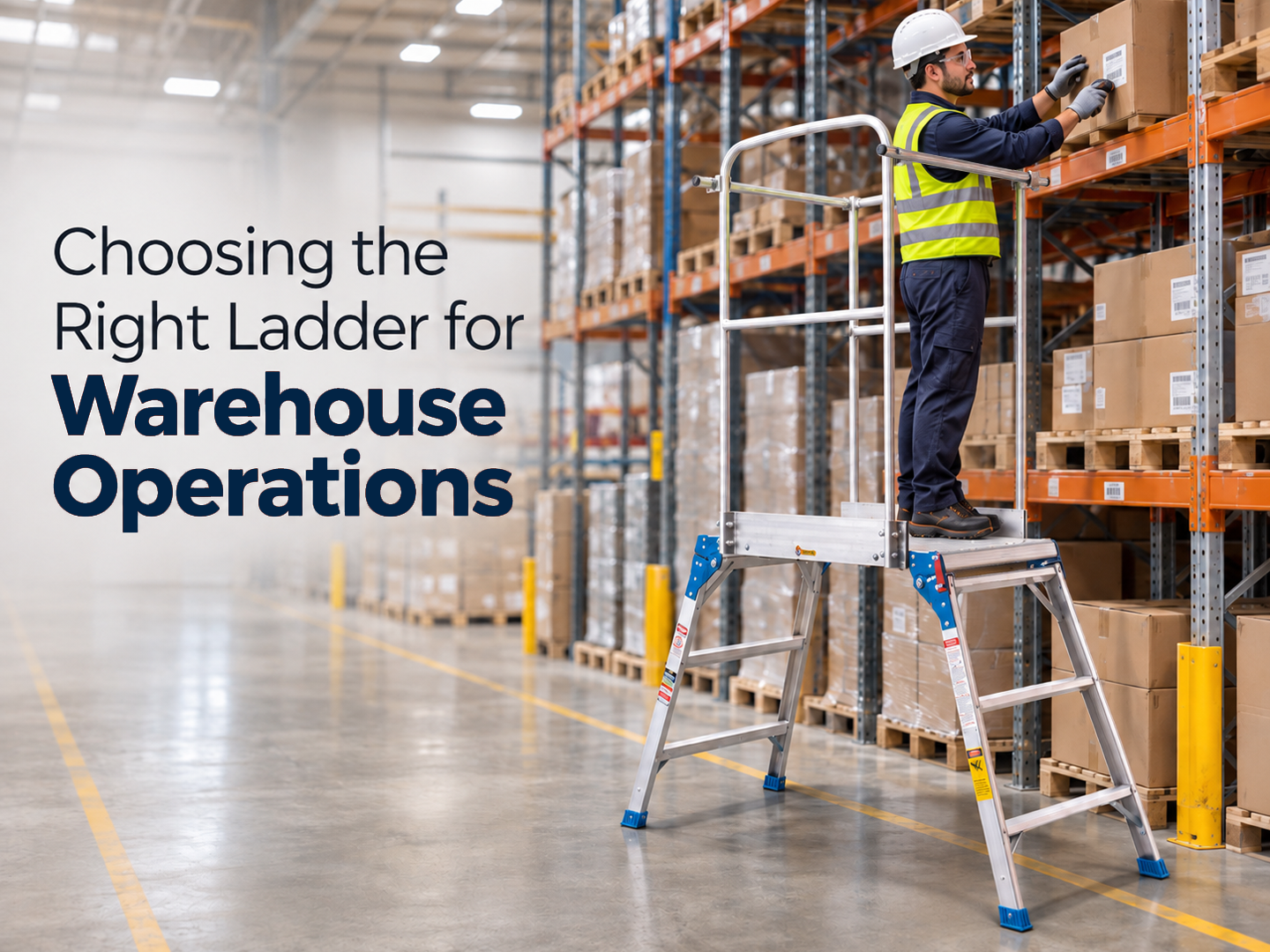
Platform ladders provide a designated standing area for elevated tasks. Depending on the design, they may include handrails and additional access features.
They can be considered for maintenance, inspection and other tasks requiring a more spacious standing area.
Custom Industrial Ladder
Suitable for specialised site requirements.
Some industrial facilities have restricted spaces, specialised machinery or unique access requirements. Custom industrial ladders can be designed around specific site dimensions and working applications.
Explore our Industrial Ladder Solutions to understand the available ladder configurations.
3. Check Working Height and Load Capacity
Working height is one of the most important considerations when purchasing an industrial ladder.
Before selecting a ladder, determine the height employees need to reach and refer to the manufacturer’s recommended working height.
Load capacity is equally important. It must account for the user, clothing, tools and equipment carried during the task.
Always verify the actual product specifications and rated load capacity. Never assume that ladders with similar dimensions have identical load ratings.
4. Consider Ladder Material and Construction
Industrial ladders are available in different materials, with aluminium being a common choice for professional access applications.
When comparing ladder options, consider:
- Material: Choose a material appropriate for the working environment.
- Construction: Check the quality of rails, steps, joints and connections.
- Portability: Consider how easily the ladder can be moved and stored.
- Application: Ensure the ladder is designed for its intended use.
For electrical applications, fibreglass ladders may also be worth considering, subject to the specific product’s verified insulation properties and manufacturer instructions.
5. Prioritise Workplace Safety and Inspection
Selecting the right ladder is only one part of workplace safety. Proper usage, inspection and maintenance are equally important.
Industrial operators should establish regular inspection procedures and ensure employees understand the correct way to use their equipment.
Important practices include:
- Inspect ladders before use.
- Check for damaged steps, rails and connections.
- Ensure locking mechanisms work correctly.
- Position ladders on suitable, stable surfaces.
- Follow manufacturer operating instructions.
- Avoid overreaching while working at height.
- Remove damaged ladders from service.
6. Why Choose Industrial Access Malaysia?
Industrial Access Malaysia provides industrial ladder and access solutions for factories, warehouses, contractors and other professional working environments across Malaysia.
With over 20 years of manufacturing experience, our capabilities include:
- Industrial step and platform ladders.
- Custom industrial ladder fabrication.
- In-house manufacturing and quality control.
- Bulk and project-based supply.
- Spare parts and replacement support.
We understand that different facilities have different access requirements. Our team supports customers in identifying ladder solutions based on working conditions, site dimensions and operational needs.
Whether you require a standard industrial ladder or a customised access solution, selecting the right equipment starts with understanding your application.
Explore our Factory & Warehouse Ladder Solutions or discover our Custom Ladder Solutions.
Frequently Asked Questions
Find the Right Industrial Ladder for Your Operations
Choosing a suitable industrial ladder is an important decision for any warehouse, factory or industrial facility.
From step ladders and platform ladders to customised industrial access solutions, the right selection should match your working height, application and site requirements.
Looking for an industrial ladder supplier in Malaysia?
Contact Industrial Access Malaysia to discuss your requirements and explore suitable ladder solutions.